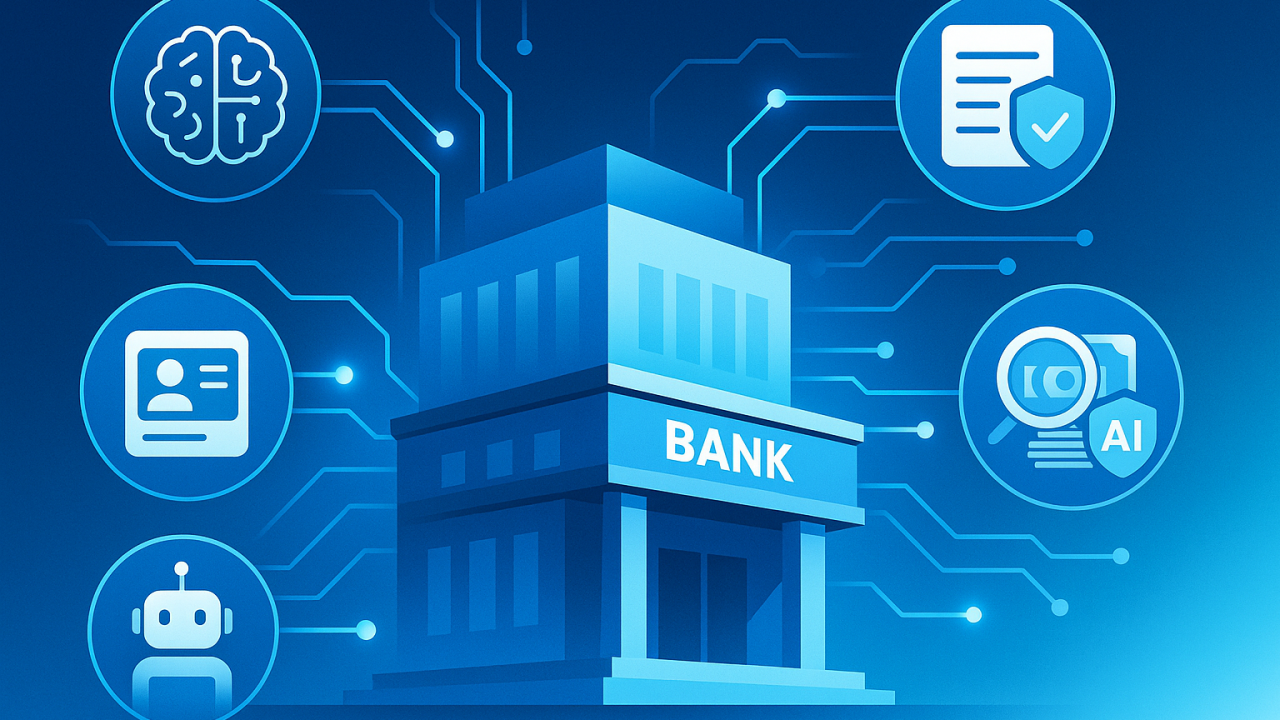
The banking industry is under constant pressure. Increasing regulations, rising fraud, and demanding customer expectations make compliance and risk management more complex and expensive than ever.
But there's a way forward: combining Robotic Process Automation (RPA) with AI-driven automation and intelligent agents.
Key Business Challenges
- Escalating Compliance Burden: Banks face mounting costs and operational strain as they struggle to keep pace with evolving regulations. Manual compliance processes increase risk exposure while consuming valuable resources.
- Inefficient KYC Processes: Customer onboarding remains slow and resource-intensive. Extended verification timelines frustrate clients, delay revenue generation, and weaken competitive positioning.
- Gaps in Fraud Detection: Traditional rule-based monitoring systems produce high volumes of false positives, driving investigation costs up. At the same time, sophisticated fraud attempts often go undetected, exposing banks to financial losses and reputational damage.
How AI + RPA Changes the Game
AI-Enhanced Compliance Monitoring
AI agents continuously scan transactions, regulatory updates, and audit logs. They automatically flag risks, adapt to new regulations, and generate compliance reports in real time, reducing both cost and human error.
Intelligent KYC Automation
AI-powered OCR, facial recognition, and document verification streamline onboarding. RPA bots pull customer data across systems, while AI agents validate it against watchlists and risk models, shortening onboarding cycles considerably.
Fraud Detection with AI Agents
Instead of static rules, AI models learn patterns from millions of transactions. Agents detect anomalies, prioritize high-risk alerts, and even auto-initiate case investigations, letting human analysts focus only on the toughest cases.
The Future of Banking Operations
Banks that embrace AI-driven automation will:
Regulation and fraud aren't going away. But with RPA + AI Agents, banks can turn compliance from a cost centre into a competitive advantage.
The future of banking isn't just digital, it's autonomous, intelligent, and customer-first.
- Reduce the cost of compliance operations
- Onboard customers faster, improving satisfaction and retention
- Strengthen fraud defences with proactive, self-learning agents
- Free employees from repetitive work to focus on strategy and customer trust