Introduction
Revenue Cycle Management (RCM) is the financial backbone of healthcare. Yet many providers still grapple with inefficiencies, rising costs, and errors that lead to delayed reimbursements. The reality is stark, manual workflows, fragmented systems, and ever-evolving payer rules drain valuable time and revenue.
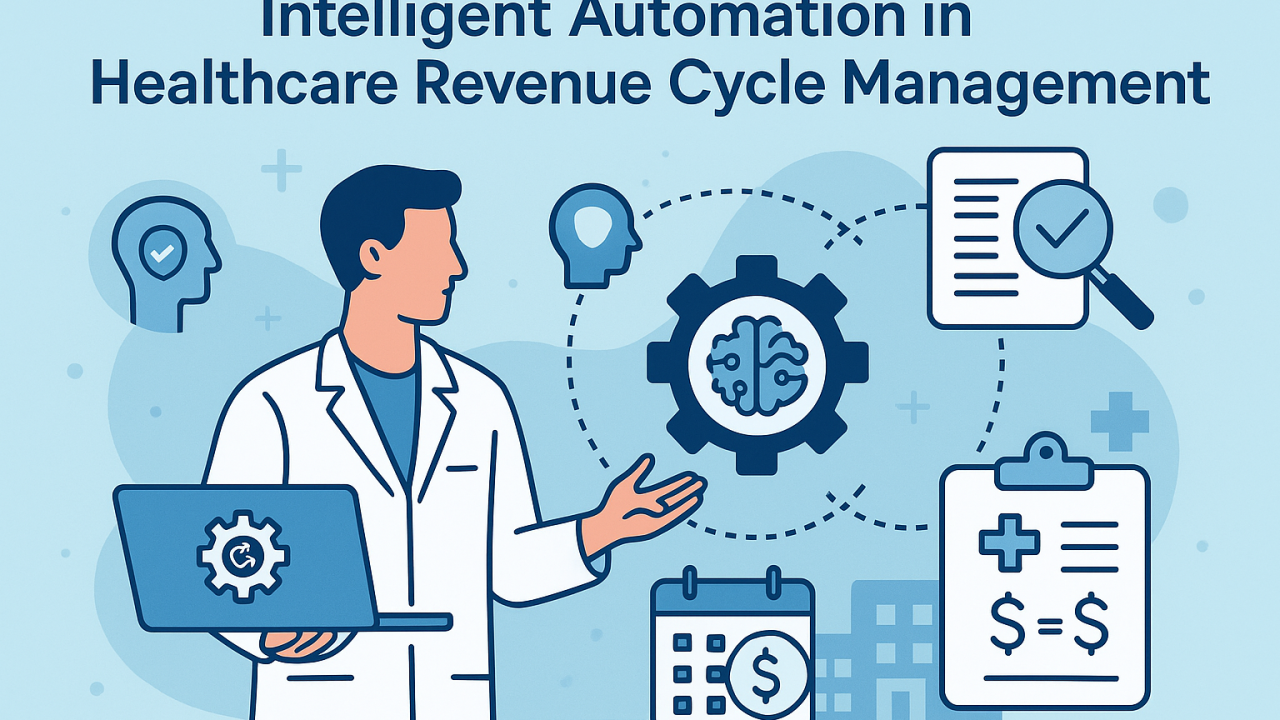
Intelligent Automation (IA), a blend of AI, RPA, and analytics, can transform RCM from a pain point into a competitive advantage.
Key Challenges in Healthcare RCM
- High Denials: With a meaningful share of claims denied on first submission, organizations face delayed reimbursements and mounting operational costs
- Coding Complexity: Constant regulatory updates increase the risk of errors, driving penalties and compliance challenges
- Data Fragmentation: Siloed systems force staff into hours of reconciliation instead of patient-focused work
- Rising Admin Burden: Escalating billing costs divert skilled talent away from care delivery
- Patient Frustration: Lack of billing transparency reduces trust, engagement, and payment timeliness
A Product & Technology Perspective on RCM Automation
Where others see complexity, there is opportunity for orchestration.
- Platform Thinking: Instead of isolated bots, a unified automation layer that integrates seamlessly across EHR, billing, and payer systems
- Human + AI Collaboration: Staff elevated from repetitive tasks to exception management and patient interaction
- Scalable Design: Modular automation components that adapt as payer rules or regulations evolve
- Continuous Learning: Intelligent systems that self-learn from denials and payer responses, getting smarter over time
- Security & Compliance by Design: Designing for HIPAA and GDPR requirements from the start, with built-in audit trails, supports trust and adoption
The Road Ahead
The journey to Intelligent Automation in RCM is not about replacing people, it's about empowering them with precision, speed, and foresight.
Healthcare organizations that embrace this transformation will not only see improved cash flow and reduced costs, but also enhanced patient satisfaction.
RCM must evolve from reactive to predictive, from fragmented to orchestrated, from administrative burden to strategic enabler.
Intelligent Automation in RCM is no longer optional. It's the lever to build financially resilient, patient-centric healthcare systems.