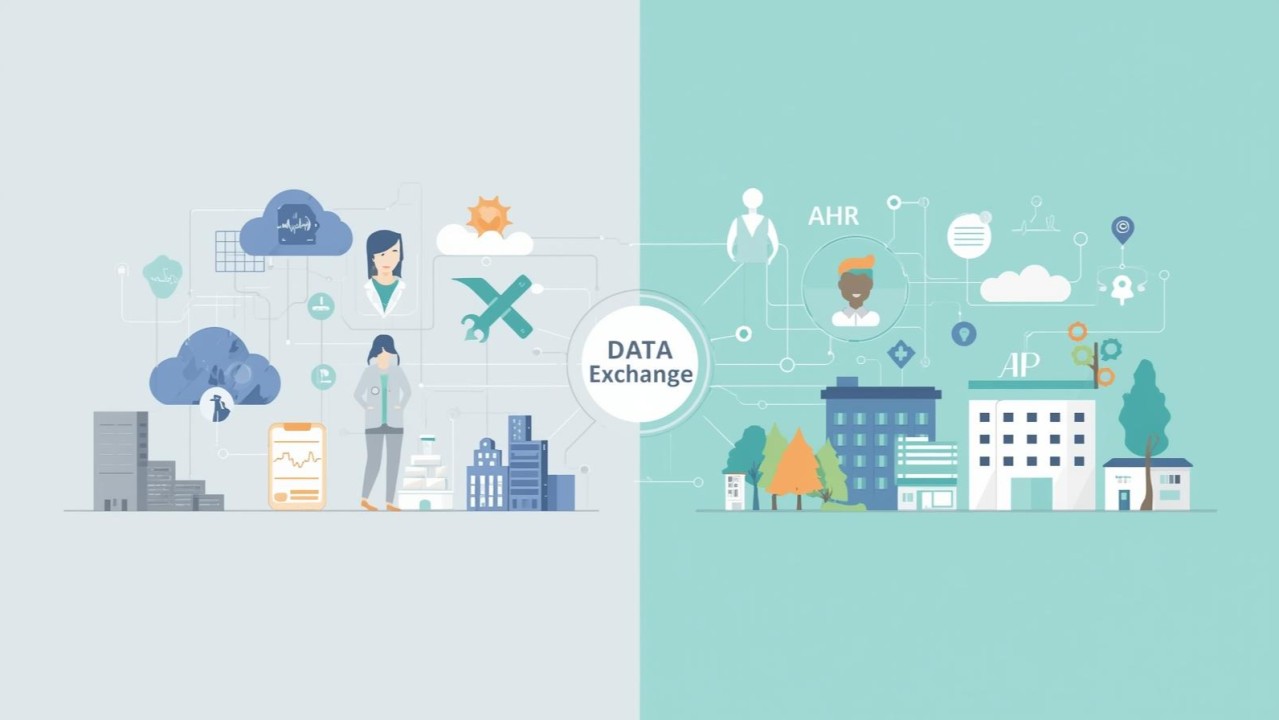
In the fast-evolving world of healthcare, one of the biggest challenges has always been data interoperability, the ability of different systems and providers to seamlessly exchange and understand patient information. Without this, care delivery becomes fragmented, inefficient, and prone to errors. Two critical standards are driving the future of healthcare data exchange: HL7 and FHIR.
The Evolution of HL7
HL7 (Health Level Seven) has been the backbone of healthcare data exchange for decades. It defined structured messaging standards that allowed systems like Electronic Health Records (EHRs), labs, pharmacies, and billing systems to talk to each other. However, traditional HL7 standards often relied on complex, rigid formats that made integration slow and costly.
The Rise of FHIR
FHIR (Fast Healthcare Interoperability Resources), developed by HL7 International, is the modern response to these challenges. Built using web-based technologies like RESTful APIs, JSON, and XML, FHIR makes data exchange:
- Faster – Real-time access to health records across platforms.
- Flexible – Modular design with resources that can be easily adapted.
- Scalable – Supports apps, wearables, and new healthcare technologies.
- Patient-Centric – Empowers patients with access to their health information.
Why FHIR Matters for the Future
- True Interoperability – FHIR enables seamless communication between EHRs, mobile apps, IoT devices, and more.
- Innovation Acceleration – Startups and developers can build healthcare apps quickly using open APIs.
- Regulatory Compliance – Governments and agencies (like ONC in the U.S.) are mandating FHIR for interoperability.
- Better Patient Outcomes – Clinicians have a complete view of patient data, leading to informed decisions.
HL7 and FHIR: Working Together
Rather than replacing HL7, FHIR extends and modernizes it. Many hospitals still run legacy HL7-based systems, but FHIR acts as a bridge, bringing modern, API-driven interoperability to existing infrastructure.
The future of healthcare data standards lies in the synergy between HL7 and FHIR. By embracing these frameworks, healthcare organizations can move toward a world where data flows seamlessly, innovation thrives, and patients receive safer, faster, and more personalized care.