Efficiency Is the New Competitive Edge
In logistics, every mile, every minute, and every movement matters. Traditional route planning relied on static maps, manual scheduling, and predictable patterns. But today's world is anything but predictable, traffic, weather, last-minute orders, and urban congestion make efficiency a moving target.
With real-time data, predictive analytics, and machine learning, AI is transforming route planning and delivery schedules, helping businesses cut costs, reduce emissions, and deliver faster than ever before.
The Limitations of Traditional Route Planning
Legacy route planning systems relied on fixed parameters, distance, stops, and vehicle capacity. They couldn't account for dynamic variables like real-time traffic and road closures, sudden order surges or cancellations, driver fatigue or compliance limits, weather conditions and local disruptions, or multiple delivery priorities (cost, time, fuel efficiency).
The result? Wasted miles, late deliveries, frustrated customers, and higher carbon emissions.
AI changes that by turning static planning into living intelligence.
How AI Optimizes Routes and Schedules
Dynamic Route Optimization
AI algorithms process real-time data, traffic updates, order changes, driver location, and continuously re-route vehicles to the most efficient path. Result: less travel time and lower fuel spend.
Predictive Analytics for Demand Forecasting
Machine learning models predict when and where delivery demand will spike, helping logistics teams pre-position vehicles or adjust fleet size proactively.
Automated Scheduling and Dispatching
AI systems assign deliveries to drivers automatically based on location, load, and availability, reducing human error and balancing workloads.
Driver Behaviour Analysis
Telematics data helps AI detect inefficient driving patterns, suggest improvements, and enhance safety, optimizing routes and performance at the same time.
Real-Time Visibility and Alerts
AI-driven dashboards provide live updates on delivery progress, enabling quick decisions when unexpected disruptions occur.
The result? Smarter, faster, greener logistics.
Sustainability: The Hidden Advantage
Optimized route planning isn't just about speed, it's about sustainability. AI-driven logistics minimizes fuel consumption through efficient routing, empty miles by better load planning, emissions by reducing idling and travel time, and packaging and storage waste through just-in-time deliveries.
A smarter route means a cleaner footprint, aligning logistics with environmental responsibility.
The Technology Behind the Efficiency
AI-powered route planning combines multiple advanced technologies:
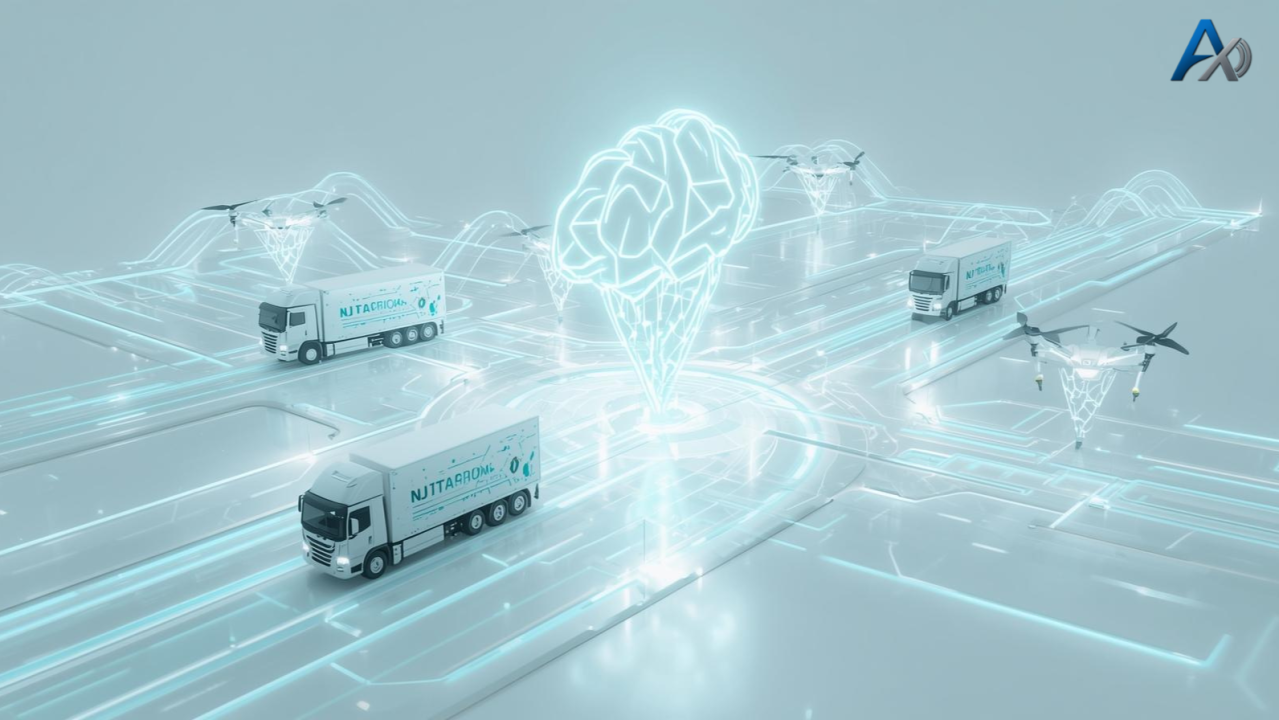
Together, they create a living logistics brain, constantly learning, adapting, and improving.
- Machine Learning (ML): Learns from past routes and performance to improve future planning
- Predictive Analytics: Anticipates demand and potential disruptions
- Geospatial Intelligence (GIS): Maps real-world conditions dynamically
- IoT & Telematics: Feeds real-time vehicle and environmental data to AI systems
- Optimization Algorithms (TSP/VRP): Solve complex route problems at scale, factoring in hundreds of constraints
Real-World Impact
For every organization, large or small, AI is redefining delivery from reactive to predictive.
- Amazon & UPS: AI-driven route optimization reduces last-mile delivery time and fuel usage dramatically
- FedEx: Uses predictive analytics for weather-based route adjustments
- DHL: Employs AI and IoT for real-time traffic re-routing and fleet coordination
- Urban Logistics Startups: Deploy AI systems to optimize bike and drone deliveries across cities
The Road Ahead
As logistics becomes smarter, expect to see autonomous route planning systems integrated directly with AI-powered fleets, drone and EV optimization for sustainable last-mile delivery, AI + blockchain for secure transparent delivery tracking, and hyperlocal predictive scheduling driven by live consumer behaviour.
The future of delivery isn't just about getting there faster, it's about knowing where to go before the order arrives.
Final Thought
AI is not just optimizing delivery, it's redefining logistics.
By combining intelligence, automation, and sustainability, businesses can move from reactive scheduling to predictive precision.
Because in modern logistics, the best route isn't the shortest one. It's the smartest one.