Healthcare organizations operate in one of the most heavily regulated environments. Whether it's internal audits, payer reviews, accreditation checks, or regulatory inspections, audit readiness is not optional. Yet many hospitals still prepare by manually gathering documents at the last minute, reconciling data across disconnected systems, relying on spreadsheets and email trails, and chasing teams for evidence. This reactive approach creates stress, increases risk, and pulls staff away from patient care. Technology offers a better way.
Why Traditional Audit Preparation Falls Short
Healthcare audits demand accurate documentation, clear traceability, timely evidence, consistent reporting, and strong governance controls. When data lives across EHRs, billing systems, quality tools, HR platforms, and file shares, audit preparation becomes slow and error-prone. The problem isn't effort, it's process and visibility.
How Technology Transforms Audit Readiness
Automated Evidence Collection: Modern platforms automatically collect audit evidence from EHR and clinical systems, billing and revenue cycle tools, quality and safety systems, HR and credentialing platforms, and policy repositories, capturing evidence continuously, not rushed during audits.
Centralized Compliance Repositories: A single structured repository where documents are version-controlled, evidence is tagged to audit requirements, access is role-based, and historical records are preserved, auditors get what they need quickly and consistently.
Workflow Automation for Audit Tasks: Automation assigns audit tasks automatically, tracks completion status, sends reminders and escalations, and maintains activity logs, nothing slips through the cracks.
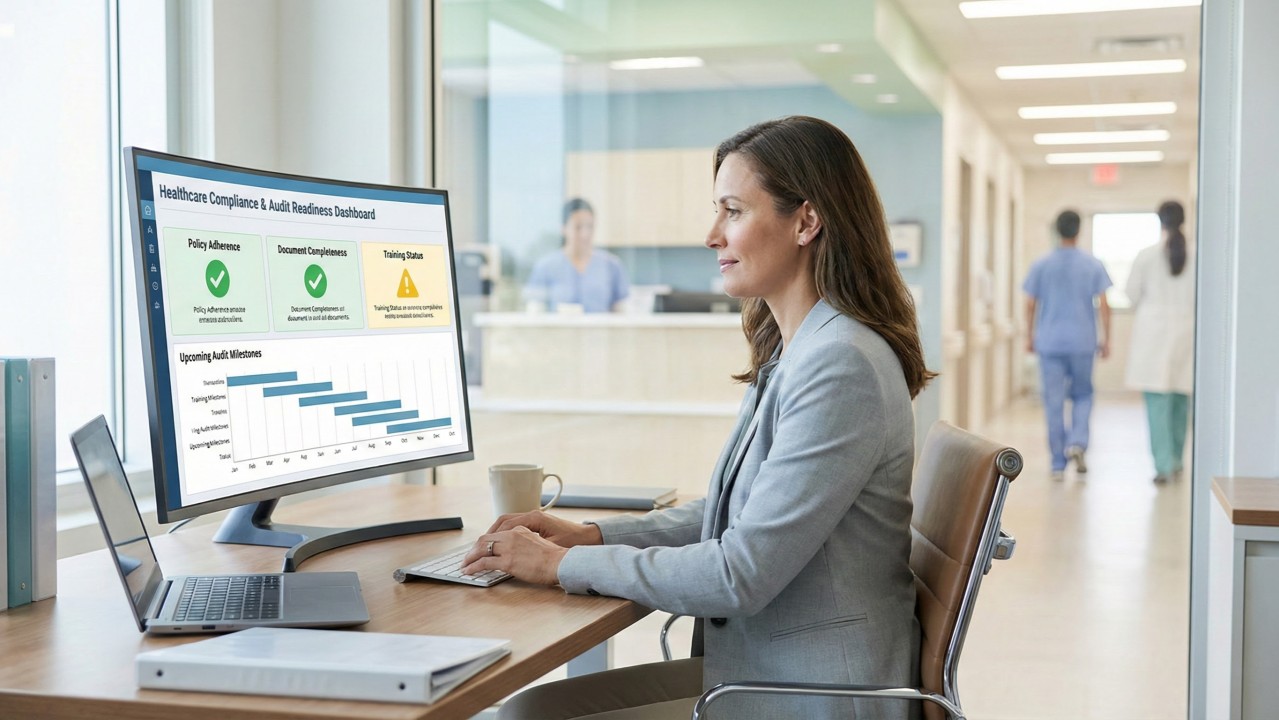
Real-Time Compliance Dashboards: Live visibility into compliance status, open gaps, pending actions, and readiness scores by audit type, issues are addressed early, not discovered during audits.
AI-Driven Validation & Exception Detection: AI flags missing or inconsistent data, detects anomalies or policy deviations, and identifies high-risk areas proactively, fewer surprises and stronger audit outcomes.
From Audit Events to Continuous Readiness
The biggest shift technology enables is moving from audit events to continuous audit readiness. Instead of preparing once or twice a year, organizations stay ready every day, with evidence, documentation, and controls embedded into daily operations.
Healthcare organizations that modernize audit readiness report reduced preparation time, lower compliance risk, faster audits with fewer follow-ups, less operational disruption, and improved staff confidence. Audits will always be part of healthcare, but chaos doesn't have to be. With the right technology, healthcare organizations can ensure compliance without diverting attention from patient care.