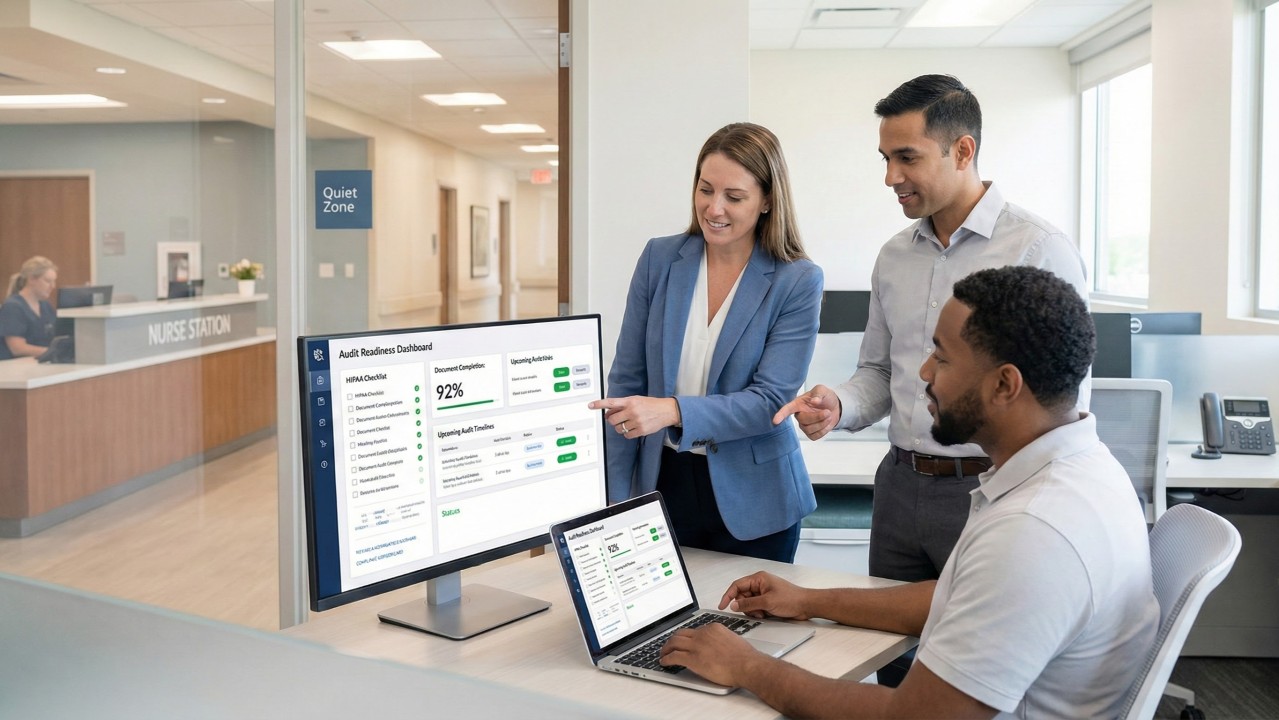
Compliance reporting in healthcare is still largely manual, spreadsheet-driven, and reactive. Teams scramble before audits, pulling data from disconnected systems, reconciling discrepancies, and hoping nothing falls through the cracks. Automation offers a more sustainable path, turning compliance from a periodic burden into a continuous, reliable process.
Why Manual Compliance Reporting Falls Short
Health systems operate across a complex web of data sources, EHRs, billing platforms, quality management tools, HR systems, and more. Manual compliance workflows suffer from:
- Data scattered across systems with no single source of truth
- Version-controlled spreadsheets prone to human error
- Staff time diverted from patient care to documentation
- Reactive preparation that begins only when an audit is announced
- Inconsistent reporting formats across departments and facilities
What Automated Compliance Reporting Looks Like
Continuous Evidence Collection: Automated systems gather data from source systems on an ongoing basis, not just before audits. This means evidence is always current and readily accessible.
Centralized Compliance Repositories: A single, structured repository holds all compliance documentation, policies, and records, searchable, version-controlled, and audit-ready at any time.
Automated Workflows & Alerts: Workflows trigger automatically when action is needed, a policy renewal, a training completion deadline, an incident report. Staff receive notifications rather than relying on manual tracking.
Real-Time Dashboards: Leadership and compliance officers get live visibility into compliance status across departments, facilities, and regulatory frameworks, without waiting for a report to be assembled.
AI-Driven Validation: AI flags anomalies, incomplete records, and potential compliance gaps before they become audit findings, shifting from reactive discovery to proactive remediation.
Governance, Audit Trails & Trust
Automated compliance systems are built with governance at their core:
This level of traceability builds trust, with regulators, accreditation bodies, and internal leadership alike.
- Complete audit trails that capture who accessed, modified, or approved every record
- Role-based access controls ensuring only authorised personnel view or act on sensitive data
- Designed to support HIPAA and GDPR requirements
- Immutable logs that support both internal reviews and external auditor requests
Business Impact of Compliance Automation
Health systems that automate compliance reporting can expect:
Compliance becomes a continuous, measurable function, not a quarterly fire drill.
- Significantly reduced audit preparation time
- Lower risk of findings, penalties, and corrective action plans
- Faster audit cycles with less disruption to clinical and operational teams
- Improved staff morale as administrative burden decreases
- Greater leadership confidence in compliance posture year-round
Healthcare organizations that invest in compliance automation don't just reduce risk, they build a foundation for operational excellence. When compliance is continuous rather than reactive, health systems can focus their energy where it belongs: on delivering better care, not preparing for the next audit.